It’s December 1985. A cold night in Massachusetts.
Inside a county jail sits a man accused of embezzling nearly a million dollars.
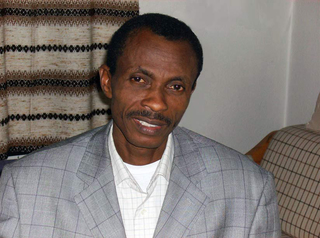
His name? Charles Taylor.
But Taylor isn’t just any prisoner. He’s a former government official from Liberia, a small African nation deeply tied to the United States.
He’s waiting to be sent back home to face charges.
Then, something strange happens.
A guard opens his cell door. Tell Taylor to get out
Taylor walks out. No alarms. No resistance.
In front was a mysterious car waiting for him.
And just like that, he vanishes into the night.
He would resurface in Libya, receiving military training.
Years later, U.S. intelligence officials admitted
Taylor had been on their payroll.
They called him an asset.
Some speculated the CIA might have orchestrated his escape to infiltrate Gaddafi’s military network.
Then, Taylor returned to Liberia with an army.
He unleashed one of the most brutal civil wars in modern African history.
He became president. He ruled through fear.
Child soldiers. Blood diamonds.
But here’s the question no one asks:
Why did the United States, the nation that claimed Liberia as its child, contribute to its downfall?
This is the story of Liberia, a small West African nation built in the shadow of the United States.
To understand Liberia’s collapse, we have to go back.
Back more than a century before Taylor’s jailbreak.
After the War of 1812, the U.S. faced a problem it didn’t know how to solve:
What should happen to free Black people in a country built on slavery?
Growing in number. Viewed as a threat by white society.
In 1816, a coalition of politicians, clergy, and slaveholders formed the American Colonization Society the ACS.
Their solution? Send free Black Americans back to Africa.
Most had never seen the continent. Africa was foreign, almost mythic.
Yet the ACS promised it would ease America’s racial tensions and plant a loyal western-style colony.
By the 1820s, ships sailed across the Atlantic.
They landed on West Africa’s coast at Cape Mesado.
Local chiefs resisted. Battles broke out. Treaties were signed under duress.
The settlers named their new home Monrovia.
(named after US President James Monroe)
They were creating a society modeled after America.
Ships continued bringing freeborn and formerly enslaved Black Americans.
Life was brutal. Tropical diseases, malaria, Yellow fever. Up to half of newcomers died within the first year.
But the settlers endured.
By the late 1830s, the colonies merged into the Commonwealth of Liberia under ACS oversight.
Over decades, more settlers arrived. They brought American customs, religion, and governance.
But they also brought a hierarchy.
American Liberians claimed all political power.
The indigenous majority were subjects, not citizens.
In 1847, Liberia declared independence.
A constitution. A president. A republic.
But the Indigenous people were excluded.
Power remained with a tiny elite. The settlers, descendants of freed slaves, became rulers over the land’s original inhabitants.
The social order mirrored the oppression they had escaped.
American Liberians imposed land ownership, taxes, and forced labor.
The elite lived in Monrovia, built schools, churches, elegant homes, even the Masonic temples.
The rest of Liberia remained under traditional leaders, largely ignored.
Conflicts erupted repeatedly.
Coastal tribes resisted. Armed clashes broke out. Many settlers were killed.
The American Liberian elite always responded with force.
By the late 19th century, Liberia expanded along the coast but had little control inland.
The True Whig Party consolidated power, ruling virtually unchallenged for over a century.
Corruption, patronage, and forced labor persisted.
By the 1920s, American corporations like Firestone dominated Liberia’s economy.
Rubber plantations brought jobs, but also exploitation.
Reports of coerced labor and human trafficking emerged.
The League of Nations investigated in 1930.
President Charles DB King resigned in disgrace.
Then World War II brought temporary stability. Liberia allied with the U.S., allowing bases and ports.
Infrastructure improved. Roads. Ports. Modern buildings.
Another Leader William Tubman rose to power in 1944.
He sought to integrate indigenous Liberians, granting citizenship and voting rights.
Yet the elite still controlled most power.
The economy grew, but social inequality persisted.
By the late 1970s, a new president, William Tolbert, tried reforms.
He opened relations with the Soviet Union and China. He challenged foreign companies. He promoted indigenous officials.
The U.S. saw its influence slipping.
In 1979, a rice price hike triggered riots in Monrovia.
Dozens died. Ethnic tensions rose.
Master Sergeant Samuel Doe, an indigenous soldier, led a squad, stormed the executive mansion, and killed the president.
The People’s Redemption Council seized power.
Doe’s regime initially enjoyed U.S. support, realigning Liberia with American interests.
But Doe favored his own ethnic group. Corruption spread. Opponents were jailed. The press was muzzled.
By the mid-1980s, Liberia was fragile.
Then Enter Charles Taylor.
Born to an American Liberian family, educated in the U.S. at Bentley College, Massachusetts.
He returned to Liberia after the Doe coup.
Doe appointed him to control government finances a powerful post for a man in his early 30s.
By 1983, Taylor was accused of embezzling nearly $1 million.
He fled Liberia. Arrested in Boston.
Then, the unbelievable happened: a daring jailbreak in 1985.
Taylor vanished. No one knows exactly how. Some say a guard left the door open. Others whisper CIA involvement.
He resurfaced in Libya, training with Gaddafi.
He formed the National Patriotic Front of Liberia. 100 fighters at first.
On Christmas Eve, 1989, Taylor crossed into Liberia, sparking the first civil war.
The rebellion grew. Child soldiers. Ethnic violence. Blood diamonds. Timber smuggling.
The U.S. watched, largely passive.
200,000 Liberians would die.
The war dragged on for seven years.
In 1997, exhausted by conflict, Liberians voted Taylor into the presidency.
He ruled with terror. Yet some allege he remained on the CIA payroll.
Then, the second civil war would soon follow.
This is how Liberia fell.
From American experiment to blood-soaked conflict.
A tiny elite, foreign interests, and secret deals set the stage.
And a man educated in Massachusetts returned to reshape an entire nation with fire and steel.
Charles Taylor: president, warlord, product of America’s complicity.
The second civil war would soon follow.
By 1999, Liberia was again engulfed in chaos.
Taylor’s first rule had fractured into new factions, each led by warlords hungry for power.
Rival armies clashed, civilians were targeted, and child soldiers continued to march with guns in their hands.
Blood diamonds and timber fueled the conflict, enriching warlords while ordinary Liberians starved and fled.
The United States, once so invested in Liberia, largely stepped back.
Washington imposed sanctions and condemned abuses publicly, but behind closed doors, Taylor’s ties to intelligence networks and regional maneuvering allowed him to maintain influence.
American companies like Firestone quietly continued business, indirectly propping up Taylor’s operations.
Liberia had become a testing ground for outside interests, where strategic and economic motives outweighed human cost.
By 2003, Taylor was forced to resign under mounting international pressure and the advance of rebel forces backed by West African peacekeepers.
He fled to Nigeria, eventually facing trial at the Special Court for Sierra Leone for war crimes and crimes against humanity.
His trial revealed the depth of atrocities committed, the networks that supplied him, and the global complicity that allowed his reign to thrive.
Today, Liberia remains scarred.
The population struggles with the legacy of two brutal wars, ethnic divisions, and disrupted institutions.
Charles Taylor is behind bars, but the systems that enabled exploitation and foreign interference continue to shape the country.
The lessons are stark: unchecked power, foreign intervention, and economic exploitation can destroy a nation from within.
Liberia’s story is a warning for Africa, and the world that development without justice leaves nations vulnerable to collapse.
And as a Pan-Africanist, I always remind myself that the fate of one African nation affects us all,
and that true freedom and progress can only come when we protect our people from both internal betrayal and external manipulation.

 11 minutes, 19 seconds






Share this page with your family and friends.